Historical computer games
Series of reviews - Part 1 - Assassin's Creed Valhalla

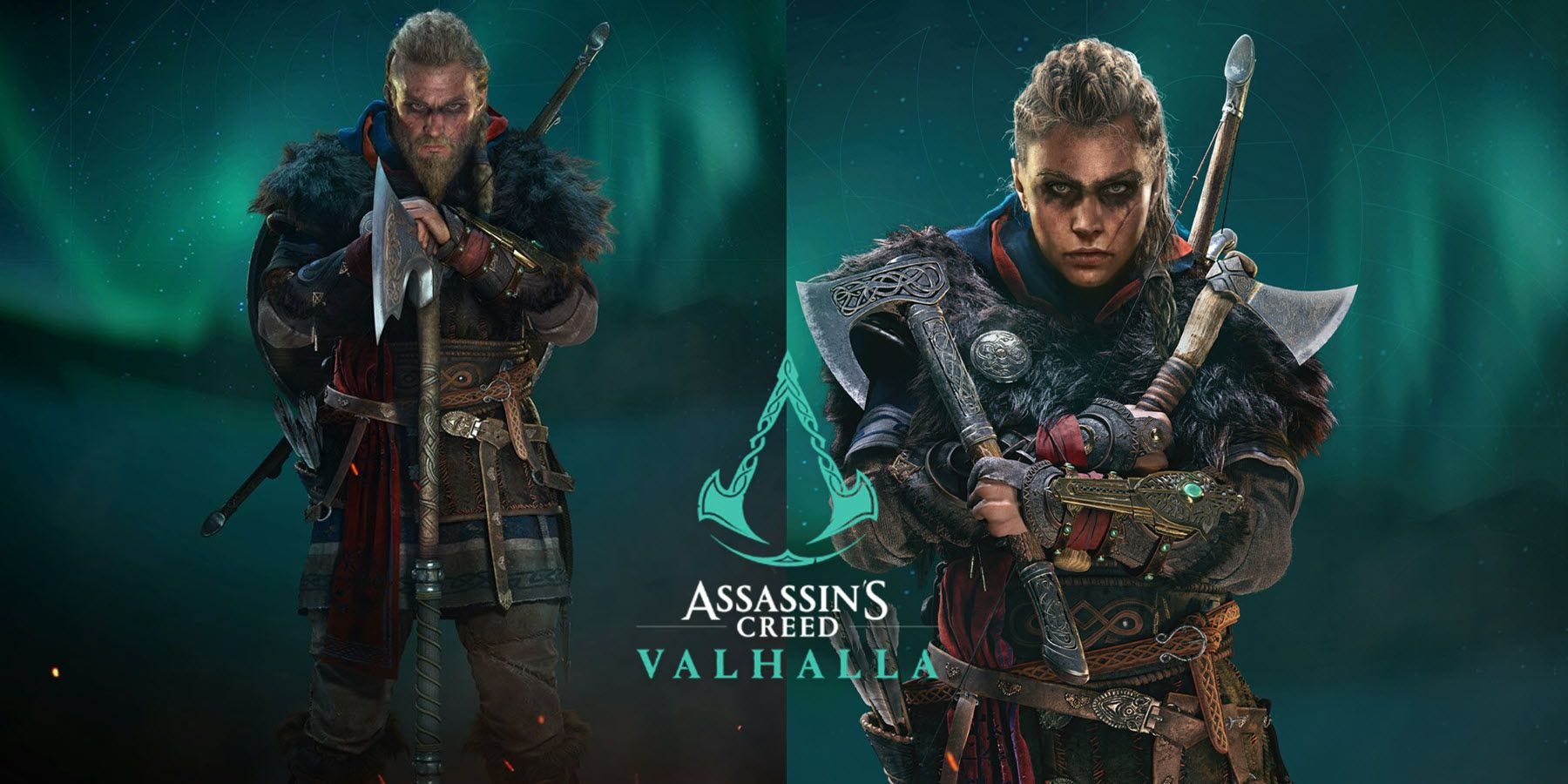
As an avid gamer, I’d like to review some historical games.
These will be based on various factors, including:
Historical accuracy plus
Historial accuracy negatives
Graphics/gameplay
An overall score (out of 100 - 1 being crap, 100 being excellent)
So without further ado, let’s start with Assassin’s Creed Valhalla.
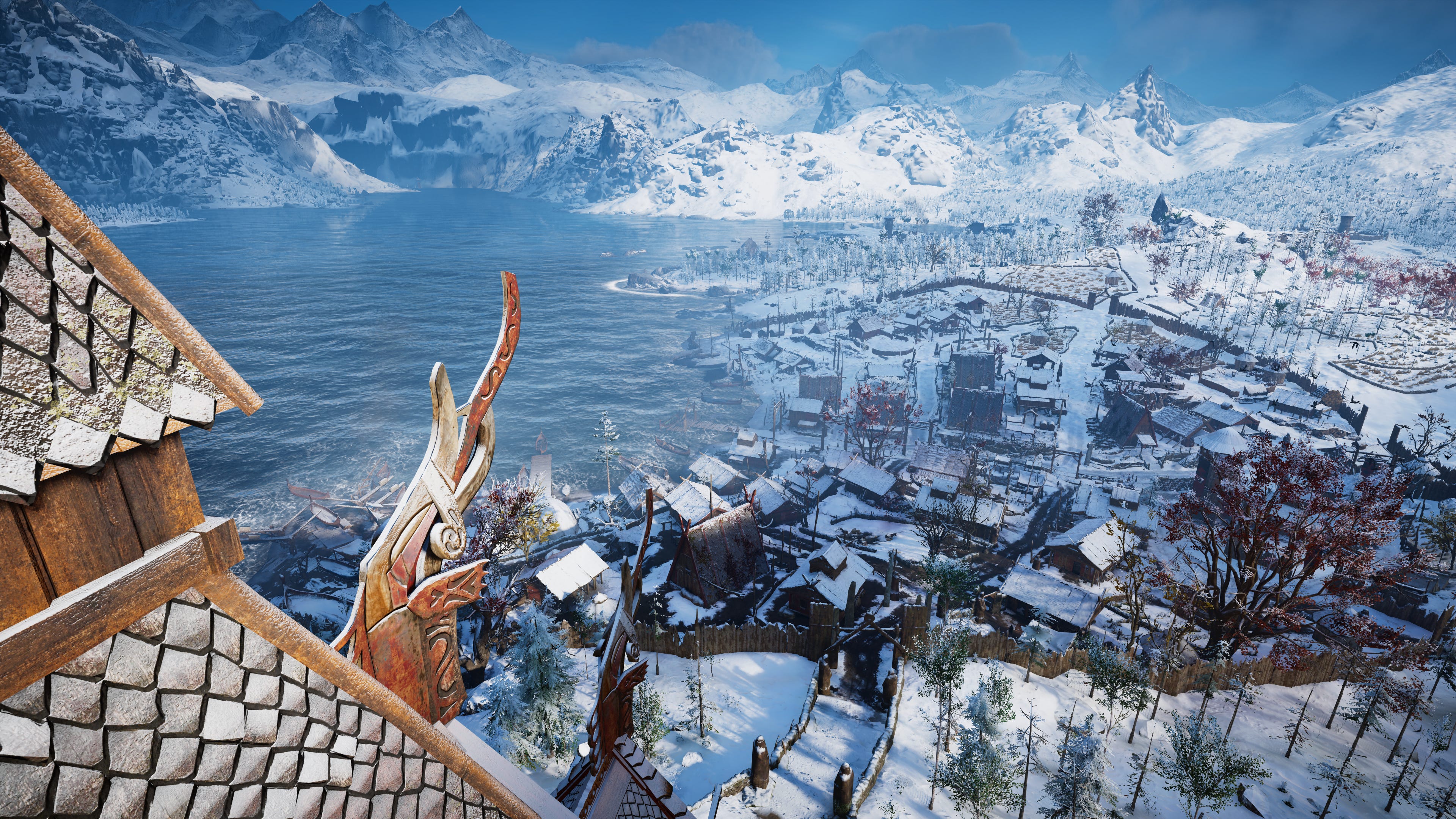
Released in late 2020, this is to date the latest release in the franchise.
It’s based in 9th century England and Norway, or what was to become England, following the adventures of Eivor Varinsdottir raiding and building alliances.
As with all other Assassin’s Creed (AC) games. it follows the secret society battle of the Assassins vs. the Templars, in owning all of the artifacts of the Isu for global control and dominion. The Isu were aliens who long ago settled on Earth, and left behind artifacts of great power for human benefit in ages to come.
Eivor, who also can be played as a man hence Eivor Varinsson as well as Varinsdottir, was born in Norway and as a child saw her parents die at the hands of Kjovte the Cruel, a rival jarl. She was adopted by her clan head, Styrbjorn, and formed a close kin bond with his son, Sigurd.
As adults, Sigurd opposed his father’s alliance with Harald Finehair, who was the first king of Norway. He had sworn fealty to Harald, and as Sigurd didn’t wish to be subject to him, he and his followers including Eivor left for England, to gain power and a name for themselves.
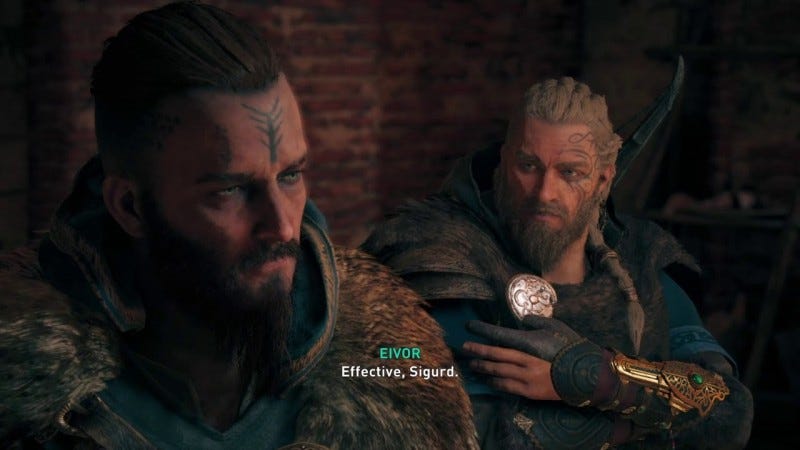
Settling in Ravensthorpe in Mercia, they slowly built alliances with other kingdoms such as East Anglia, Kent, Sussex, and Northumbria, and thus sought to challenge and overthrow King Alfred the Great of Wessex. Whilst we don’t see the Battle of Edington, an alliance of Eivor, Sigurd and other kingdoms in England they’ve befriended oust King Alfred from Chippenham, leading to his exile in the marshes of Athelney.
The game ends with Sigurd and Eivor travelling back to Norway to visit an ancient Isu complex, where they retrieve a sacred item in kind.
Various DLCs also exist, featuring trips to Paris, Ireland, Vinland, Valhalla, and the Isle of Skye.
Historical accuracies plusses
The settings and characters are accurate, along with the main historical figures.
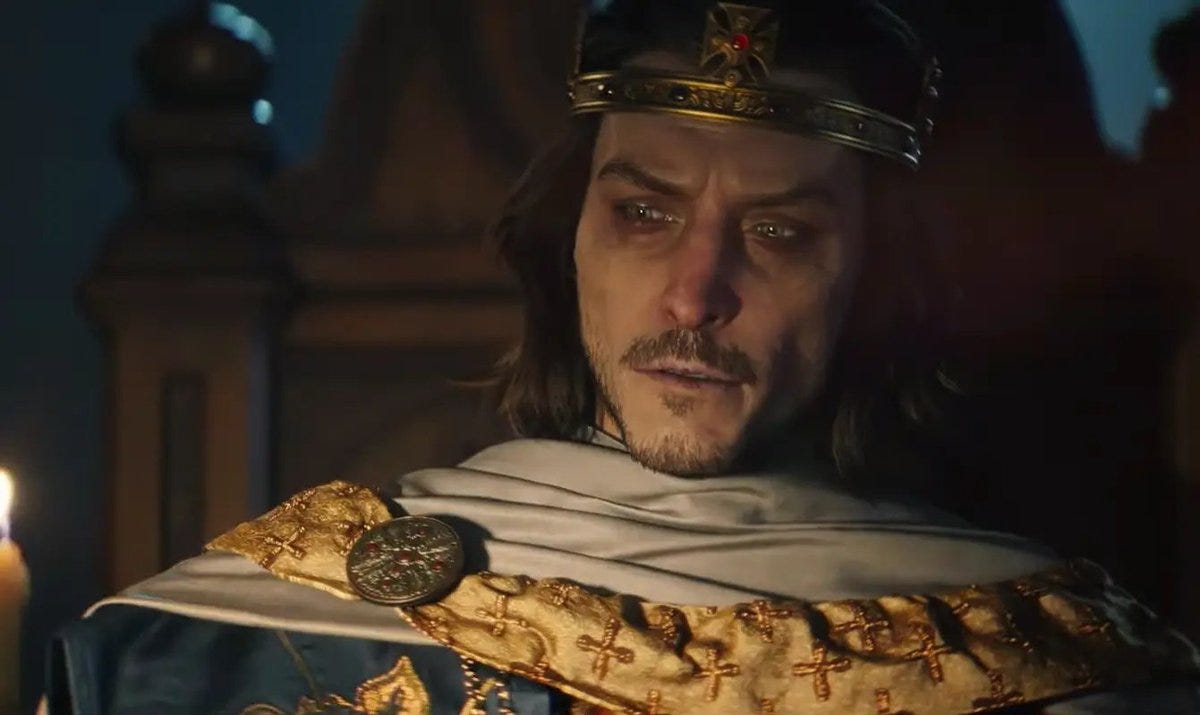
This includes Alfred the Great, Rhordi the Great, the sons of Ragnar Lothbrok (as in Ivar the Boneless, Halfdan, and Ubba), Harald Finehair, etc. The DLCs too build on this theme, with King Charles the Fat of Francia featured.
The game has extensive Roman ruins and remains throughout England, signifying the link to the past. London is denoted as a former Roman city, and Winchester, Jorvik (or York), Leicester, Colchester, Norwich, Cambridge, Buckingham, Lincoln, Nottingham, and Canterbury are all featured as prominent places, as was true in the period.
Fighting tactics and costumes also are on point, including the occasional use of Old English and Old Norse.
What’s more is that the Norse characters are voiced by real-life Scandinavians, and the English characters by real-life English. I feel this adds realism and authenticity, even though Alfred the Great would not have spoken with an actual RP accent as he does in the game. He wouldn’t have spoken modern English for that matter.
The landscapes broadly match real life. Northern England isn’t all snow as depicted in the game, but it does reflect a different environment and setting. Southern England is mostly open grassland, and Mercia (roughly the English midlands) is a mix of rolling hills, mountains, and open fields. There also is the Fens in East Anglia and rocky parts of central England such as the Peak District (or approximations of such).
Whilst not totally historically accurate, it does well to capture the feel of the setting.
6/10
Historical negatives
Not all of England is shown, specifically what are now Devon and Cornwall.
Moreover, not all Anglo-Saxon kings of the era are shown, such as Edmund the Martyr of East Anglia. Though Burgred and Ceowulf of Mercia are depicted.
It would have been nice also to see the Battle of Edington and the defeat of Guthrum, though Guthrum is seen in the latter part of the game.
Norway too is shown as snow and ice, though again to reflect its more northerly and remote location.
Total accuracy isn’t to be expected. Though overall, the flaws are few.
4/10
Graphics/gameplay
As an RPG, it handles very well in the common open-world format.
All of the major maps/counties can be explored at will, with various treasures, mysteries, and related points to gain.
The fighting, via melee weapons mostly but also including magical items, is well done too.
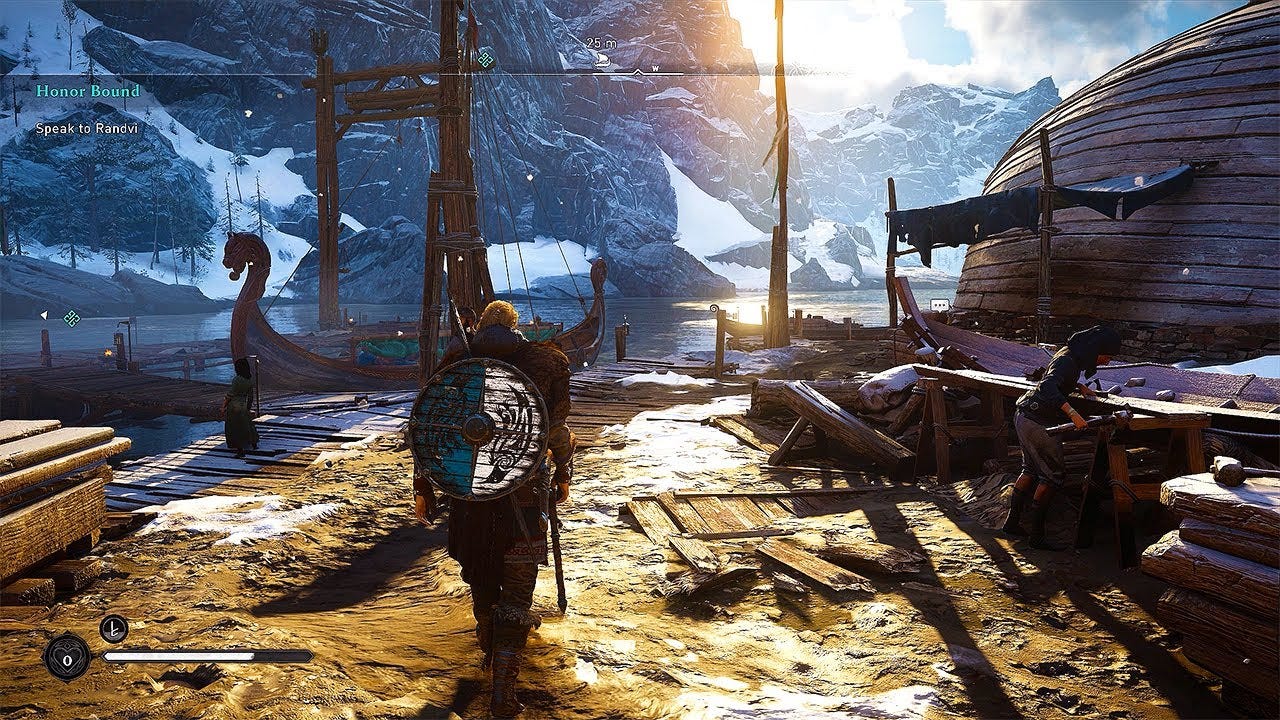
The dialogue is well-written, including humourous aspects. There also are some racey parts included. These aren’t too gratuitous though they aren’t necessarily for kids.
Another part for mature people is some of the killing scenes - note they include decapitation and dismemberment. So overall, the game is for mid-teens and above and not for small kids.
Bugs arise occasionally but aren’t overly common. And the use of different arms via a standard gamepad is straightforward.
9/10
Overall - 85/100
I enjoy this game a lot, and I feel it does well as a good introduction to the era.
It does the best it can to be accurate, and like the other AC franchise games immerse itself in a given historical era.
For those interested in Norse and Anglo-Saxon history, it is a good jump-off guide to get more entailed in the backdrop.
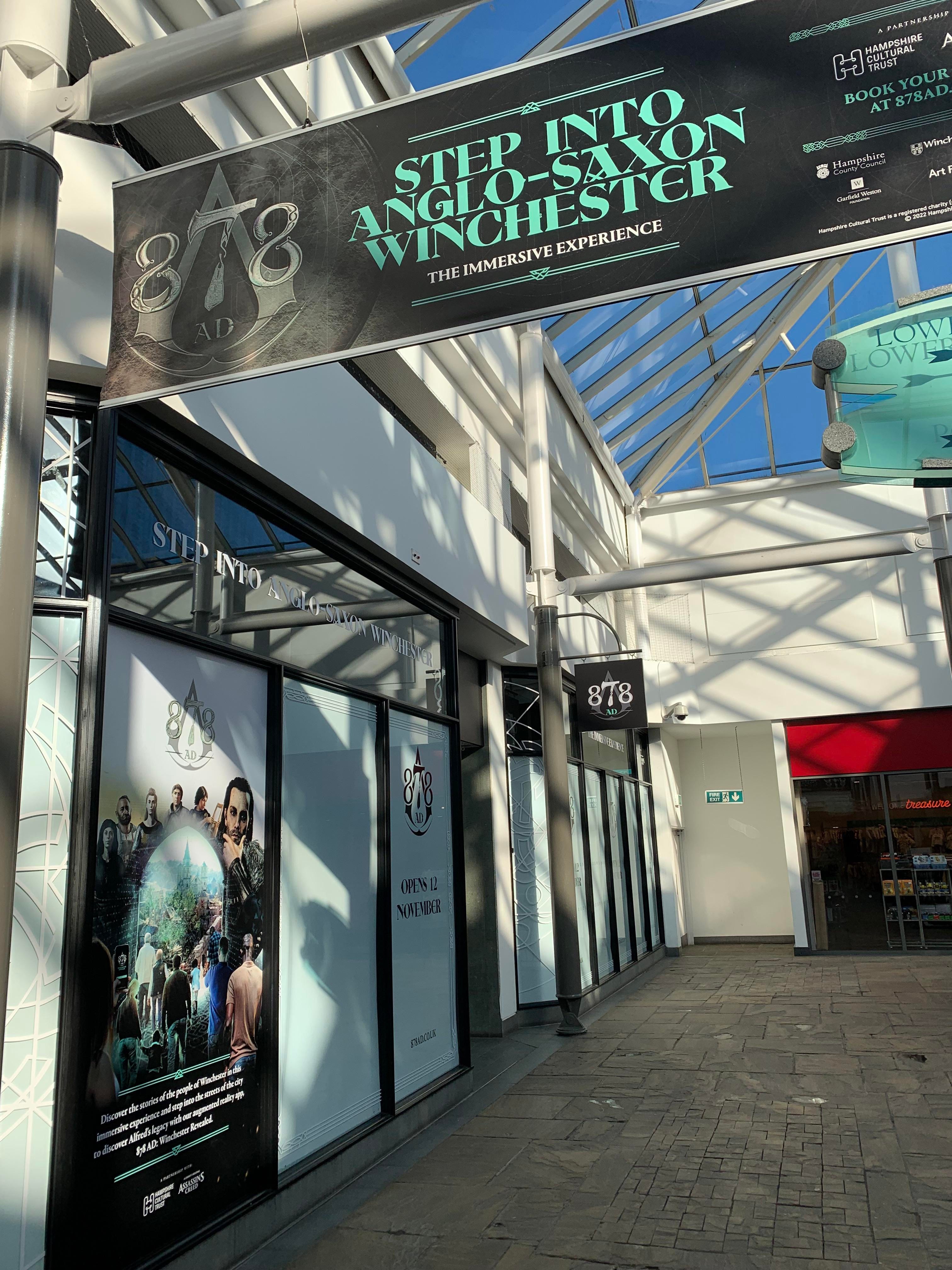
There is also an exhibit to attend at Winchester, as the city is featured heavily in the game itself.
It’s definitely one of the best RPGs released in recent years. And it’s fully recommended for history buffs and gamers alike.